Short answer: In Tamil Nadu, land marked for agricultural use cannot be used for house plots, layouts or shops until a change of land use is approved. In Master Plan areas, the Government approves the change by a Government Order published in the Gazette. Outside planning areas, the local body gives permission only after the Director of Town and Country Planning agrees, and wet land has extra checks. All applications go through the single window portal at onlineppa.tn.gov.in.
This guide is for landowners who want to build on or plot farm land, and for buyers who are offered "converted" land. It was checked against the official Tamil Nadu town planning, single window portal and Government Gazette websites in October 2026.
Why farm land cannot simply be built on or plotted
Under the Tamil Nadu Combined Development and Building Rules, 2019, land in an agricultural use zone may be used for farming, farm houses, buildings for agricultural work, dairy and poultry farms, and some related uses. Residential uses are allowed only inside natham (village settlement) boundaries. Every other use is prohibited, so a housing layout or shop needs the land use to be changed first.
Outside planning areas, section 47-A of the Tamil Nadu Town and Country Planning Act, 1971 applies. Any development needs permission from the local body, which must first get the prior concurrence of the Director of Town and Country Planning.
Which route applies to your land
| Where the land is | What you apply for | Who gives the final approval |
|---|---|---|
| Area with an approved Master Plan or Detailed Development Plan | Change of use of land (a variation of the plan) | The Government, by a Government Order and a Gazette notification |
| Non-planning area | Permission under section 47-A and the 2017 change of land use rules | The local body, after the Director's prior concurrence |
The Directorate of Town and Country Planning (DTCP) covers the whole state except the Chennai Metropolitan Area, which the Chennai Metropolitan Development Authority (CMDA) handles. Since a Government Order of 28 October 2025, these applications are accepted only through the single window portal, not offline.
Change of land use in a Master Plan area
Section 32(4) of the Act lets the Government vary a master plan by a notification in the Tamil Nadu Government Gazette. The DTCP procedure on the portal has these steps:
- You submit the application online.
- Officials inspect the site.
- The application is scrutinised, and you may be asked for more details.
- A newspaper advertisement is published. The public gets 30 days from publication to send objections and suggestions.
- The local body gives its remarks, and other departments give a no objection certificate (NOC) where one applies.
- The file goes to the Director and then to the Government.
- The Government issues a Government Order, and the change is published in the Gazette.
The scrutiny fee is a lump sum of ₹20,000 in DTCP areas and ₹30,000 in the Chennai Metropolitan Area. You also pay for the newspaper and Gazette notices.
Documents for a change of land use application
The portal lists these documents for a DTCP application:
- The application for change of use of land (Form IA in the October 2025 amendment, listed on the portal as Form A1)
- Ownership documents, such as the sale deed or other title documents
- The patta (land ownership record) or Town Survey Land Register (TSLR) extract, with the FMB (Field Measurement Book) sketch or TSLR sketch
- A combined FMB of the site and the access road, if the site falls in more than one revenue sub-division
- A site plan with GPS coordinates and a topography map covering 500 metres around the site
In the form you declare that you own the land, have not encroached on government land, and that the site is not a water body or poramboke (government land kept for public use) and is not covered by the land ceiling, land reforms or land acquisition laws. A registered architect, engineer or town planner must prepare the plans.
Farm land outside planning areas
Here the Tamil Nadu Change of Land Use (From Agriculture to Non-agriculture Purposes in Non-planning Areas) Rules, 2017 apply. The local body (municipality, town panchayat or village panchayat) grants permission only after the Director gives prior concurrence.
- Wet land (nanjai): Section 47-A also requires the District Collector's prior concurrence. Under the 2017 rules, the Collector inspects the site and checks that it is not a water body, poramboke, temple or wakf land, is not under high tension power lines and is not fit for continued cultivation, looking at the irrigation source and how long it has been left uncultivated.
- Dry land (punjai): Since an amendment published on 3 August 2026, the Director decides on prior concurrence after checking the documents the applicant uploads.
A Bill introduced in the Assembly on 1 September 2026 proposes to give the wet land concurrence to the Director instead of the Collector. Check the portal for the position when you apply.
The 2017 rules also provide for a land use conversion charge, which the local body collects before it grants permission. The portal shows the charges due before you pay.
Layout approval is a separate step
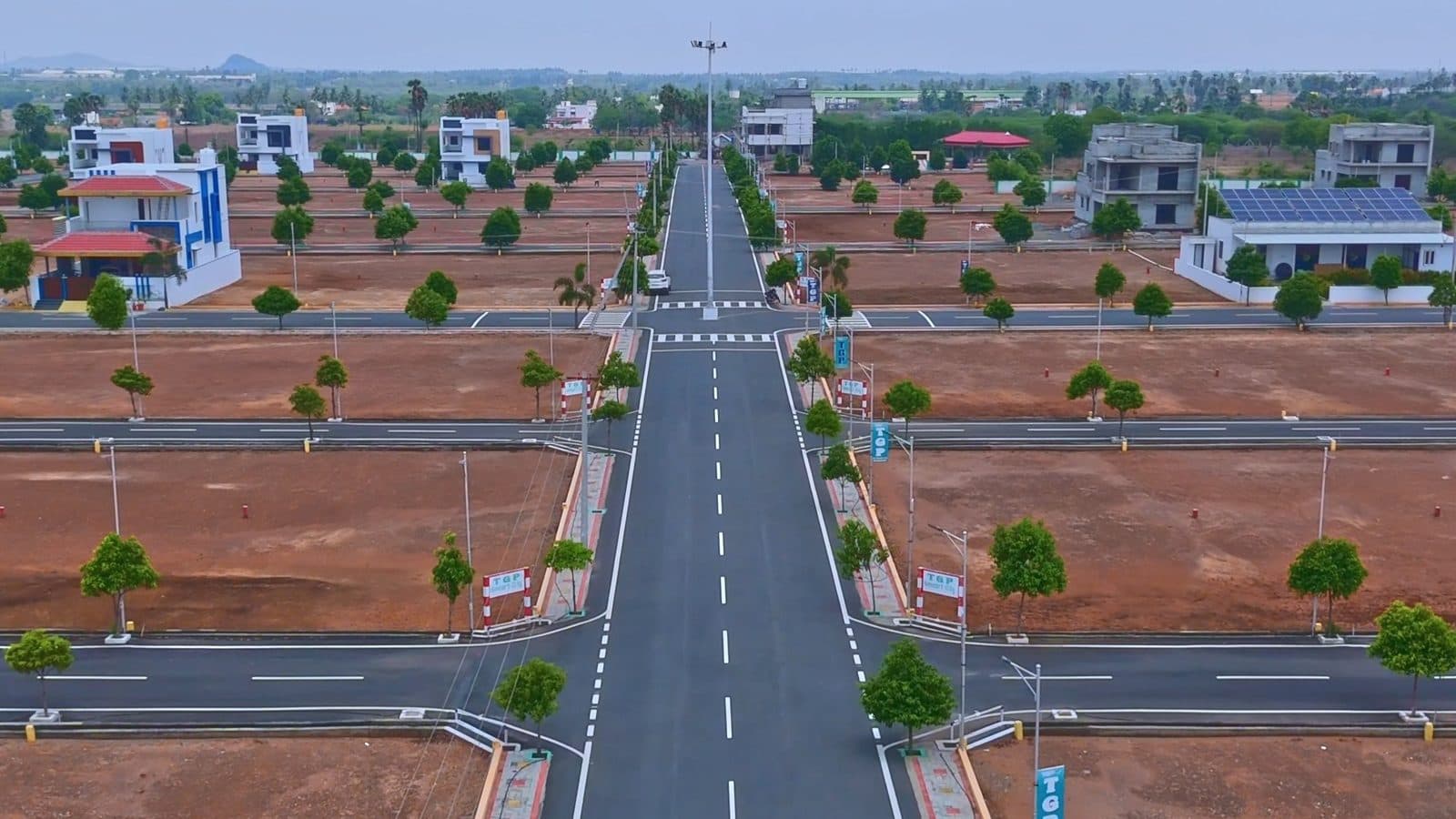
A change of land use does not create approved plots. Dividing land into plots with new roads needs its own layout approval from DTCP, CMDA or the local planning authority, applied for on the same portal. In non-planning areas, the 2017 rules ask for the proposed layout plan with the application when a layout is planned. Our guide on how to check DTCP approval for a plot explains how to verify a layout.
What buyers should check before buying "converted" land
- Ask for the approval, not an application receipt. In a Master Plan area, that is the Government Order and Gazette notification; DTCP lists approved master plan variations on tcp.tn.gov.in under Approvals. In a non-planning area, it is the local body's permission issued after the Director's concurrence.
- Match the survey numbers, extent and owner's name in the order with the patta, FMB sketch and sale deed.
- DTCP advises buyers to verify the patta and encumbrance certificate, the land use zone in the Master Plan, and that the layout is approved by DTCP and sanctioned by the local body, with roads and parks handed over to the local body by gift deed.
Next steps
- Check patta and chitta (land records) online
- Get an encumbrance certificate online
- Browse farm land for sale in Tamil Nadu, where every listing has a video tour